How to Choose the Right EV Charger for Your Business
The right charger depends on what your vehicles need and what your current electrical system can handle. Before specifying equipment, we evaluate your existing service and distribution capacity so the charger type and quantity you choose can be supported while accounting for other operations.
Electric vehicle chargers are broken up into three main categories:
- Level 1 Charging: Uses standard low-voltage service and is the slowest commercial charging option. Charging time depends on vehicle battery size, state of charge, and charging management settings. This option is generally better suited to locations where vehicles remain parked for extended periods and faster throughput isn’t required.
- Level 2 Charging: The most common choice for commercial facilities, workplaces, and fleet locations where vehicles park for several hours. Level 2 EVSE requires a dedicated 208/240-volt circuit, and installation may require panel or service capacity upgrades depending on existing load. Charging speed varies by charger output, vehicle onboard charger, and battery size.
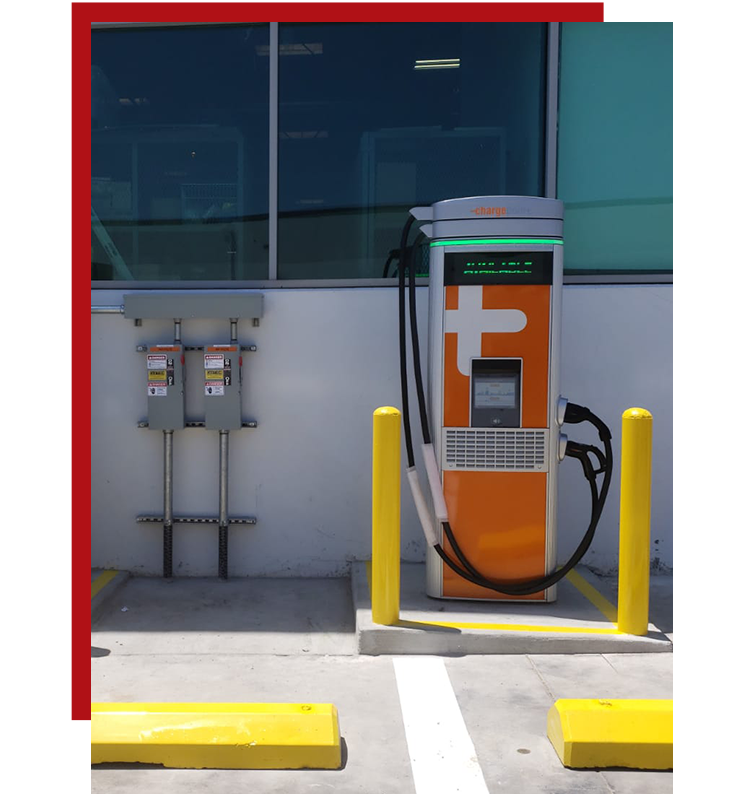
- DC Fast Charging: Intended for sites where vehicles need shorter charging dwell times and where the electrical service can support significantly higher demand. DC fast charging is well suited to fleet operations, high-turnover commercial locations, and industrial facilities that need vehicles back in service quickly. Electrical load requirements are substantially higher than Level 2, and a thorough capacity review is essential before installation.
Choosing the appropriate EV charger involves assessing not only the type of vehicles your business operates but also the charging speed necessary to maintain efficient operations. For businesses with fleets or high customer turnover, faster Level 2 or DC fast charging can enhance throughput. Equipment compatibility and connector requirements should be confirmed before specifying the charging system. It’s also important to consider future growth and ensure your infrastructure can support additional charging ports as your fleet or site demand grows.
In a dense urban environment like Los Angeles, many commercial properties are managing limited electrical capacity, older infrastructure, or shared utility services within multi-tenant buildings. A thorough site assessment can help you understand whether your panel, transformers, and distribution equipment are ready for added EV load or if upgrades are needed to safely support new stations. Planning early allows Los Angeles businesses to coordinate their electric car charger installation with local building inspectors and utility providers and address relevant city and state codes.
What Are the Benefits of Installing EV Charging Stations for Your Business?
Commercial charging infrastructure can be planned around your operational goals, site use, and energy demand.
Some key considerations when installing commercial EV charging stations include the following:
- Potential participation in state and local incentive programs and rebates, subject to program eligibility and availability.
- Supporting fleet operations and reducing dependence on fuel infrastructure.
- Preparing your property for growing commercial EV use.
- Aligning site infrastructure with sustainability objectives.
- Providing employee or customer charging access.
- Planning charging infrastructure for future expansion.
- Deciding who can access the chargers and whether users will pay a fee.
The financial outcomes, customer behavior effects, and property-value changes that result from installing charging infrastructure depend on the property, utility, equipment, program eligibility, and your business model. Our team can walk you through what applies to your specific site and operational goals.
Need EV charger installation in Los Angeles? Reach out to our team of commercial electricians to discuss your site, charging needs, and free estimate. Call (323) 215-1273.
Charging Infrastructure for Tesla & Other EV Models
Businesses throughout Los Angeles frequently ask how their charging infrastructure should account for Tesla vehicles. The answer depends on several factors beyond the vehicle model alone: charger output, vehicle onboard charger capacity, battery size, current state of charge, temperature, and any active charging management settings all influence how long a charge takes. Rather than targeting a single vehicle profile, a well-designed commercial charging plan addresses the full range of EVs expected to use the site.
Equipment compatibility and connector requirements vary by vehicle and charger type, so both should be confirmed before specifying a system. Our team evaluates your vehicle mix, parking layout, and operational schedule to recommend a charging configuration that serves your current fleet and can adapt as EV models and connector standards continue to evolve. If you’re interested in installing an EV charging station at your business, contact Southwest Industrial Electric today.
For additional planning considerations, read about future-proofing your business for evolving automotive technology.
Optimizing EV Charging Solutions for Los Angeles Businesses
Commercial and industrial properties in Los Angeles need EV charging plans tailored to their sites and operations. Available electrical capacity, parking constraints, vehicle use, and existing infrastructure can vary considerably from one property to another.
Common considerations for Los Angeles commercial and industrial properties include:
- Available electrical capacity to support multiple chargers while accounting for existing operations and potential service upgrades.
- Parking layout, accessible routes, and traffic flow to support access to chargers and equipment placement that fits the site.
- Vehicle dwell time so charger level matches how long vehicles remain on-site.
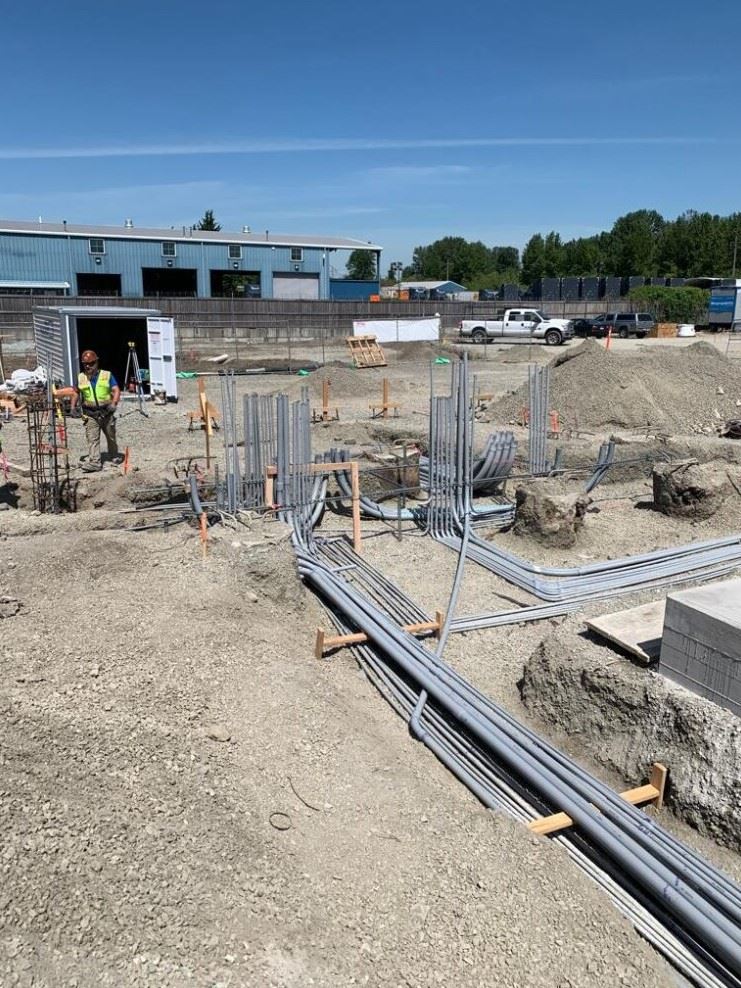
- Trenching and conduit routing based on the distance between the electrical service and planned charger locations.
- Phased deployment for fleet and industrial sites that anticipate future port expansion or load growth.
Los Angeles permitting for EV charging projects may require documentation including site plans, accessible charging layouts, electrical load calculations, equipment information, and single-line diagrams. Permit jurisdiction can vary by project location, so the applicable city or county authority should be confirmed before construction begins.
At Southwest Industrial Electric, we assess your property, energy capacity, and usage needs before recommending equipment or placement. Whether you’re in Downtown LA, the San Fernando Valley, or elsewhere in the Los Angeles area, we can design and install a solution around your charging demand and operational priorities.
Plan for Expansion Before Installing the First Chargers
Before installation, we assess whether your electrical system can handle the increased load and identify any panel, service, or distribution upgrades the project may require.
Long-term planning should also account for additional charging units, fleet growth, and new equipment that could change your overall power profile. We can recommend a phased approach that fits your current operations while preparing the site for future expansion with less disruption to day-to-day business.
Related Reading
Why Commercial EV Charger Installation Requires a Commercial Electrical Contractor
Installing EV chargers at a commercial property involves high electrical demand, load calculations, protective equipment, code compliance, accessibility requirements, inspections, and operational testing. A qualified commercial electrical contractor can coordinate these requirements as part of a complete charging project.
1. Capacity Planning for High Electrical Demand
Commercial EV charging stations may need to accommodate multiple vehicles simultaneously. A commercial electrical contractor understands load balancing, panel and service capacity, distribution equipment requirements, and compliance with applicable electrical codes and standards.
2. Customized Design for Your Property
Our in-house electrical design and engineering department can assess your site to determine appropriate charger placement, confirm adequate power supply, and design a scalable system that supports future expansion as your fleet or site demand grows.
3. Permits & Compliance
Installing commercial EV chargers in Los Angeles involves local building codes, permits, inspections, and project-specific documentation. We coordinate these requirements and install equipment in accordance with applicable city and state standards.
4. Integration with Existing Electrical & Energy Systems
Our team has experience with battery energy storage systems, backup power and generators, uninterruptible power supplies, energy-efficiency projects, and renewable energy integration. A commercial EV charging project can be designed to work alongside these systems rather than in conflict with them.
5. Maintenance & Ongoing Support
We provide 24/7 availability for current customers when urgent electrical issues arise. Our team can also support inspections, troubleshooting, repairs, equipment changes, and future charging expansion as your needs evolve.
Commercial Electrical Experience Since 1988, Applied to EV Charging
We’ve completed more than 12,000 commercial and industrial electrical jobs across California and the Southwest. Many clients have worked with us for 10 to 25 years, and one distribution company has relied on our services for more than 30 years.
We serve major commercial and industrial operations including Amazon, Tesla, PepsiCo, Frito-Lay, and Swinerton. We’ve also built particular depth in distribution centers, aerospace manufacturing, cold storage, media studios, and industrial facilities where electrical capacity and operational continuity are non-negotiable.
Here’s what sets us apart for commercial EV charger installation in Los Angeles:
- Industrial and Commercial Focus: We work exclusively on commercial and industrial projects. Our entire team is oriented toward the electrical systems and challenges specific to business environments.
- Licensed and Certified: We hold a California C10 Electrical Contractor license. Our electricians are factory-trained and OSHA-certified.
- In-House Design and Engineering: We don’t just execute plans handed to us. We engineer customized solutions built around your property, your load profile, and your long-term expansion plans.
- Full-Service Capabilities: From power services and control systems to battery energy storage, preventative maintenance, and infrared inspections, we handle the broader electrical environment your charging infrastructure lives within.
- Honest, Fair Pricing: We provide free estimates for all commercial and industrial electrical projects with transparent pricing and no surprises.
With more than $70 million in billing and thousands of electrical projects completed each year, we have the scale and resources to handle large and complex EV charging installations while maintaining the direct client service that keeps businesses coming back.
Frequently Asked Questions
How Long Does the Installation of Commercial EV Chargers Typically Take?
Installation timing for commercial EV charger projects in Los Angeles depends on project scope, charger type and quantity, required electrical work, permitting, inspections, and utility coordination. Our team conducts a thorough site assessment before work begins and provides an estimated timeframe based on your specific situation. We work to minimize disruption to your operations throughout the process.
Are Commercial EV Chargers Compliant with California Regulations?
Commercial EV charger installations involve applicable California electrical requirements, local permitting jurisdiction, accessibility requirements, and listed equipment standards that vary by project and location. We install to applicable code requirements and coordinate with the relevant local authority having jurisdiction. Our licensed commercial electricians follow the guidelines applicable to each specific project.
How Can Installing EV Charging Stations Benefit My Los Angeles Business?
Installing EV charging stations at your Los Angeles business can support fleet operations, provide employee or customer charging access, and align your property infrastructure with growing EV adoption. Depending on your property, utility, and business model, charging stations may also support participation in incentive programs and improve site functionality. The specific outcomes depend on your operational context and site goals.
What Support Does Your Team Offer for EV Charger Installation?
We provide support for EV charger installation from site assessment through installation planning. Our team evaluates whether your electrical system can handle the increased load and develops solutions tailored to commercial and industrial properties throughout Los Angeles.
What Is the Typical Cost of Installing an EV Charger in Los Angeles?
The cost of installing a commercial EV charger in Los Angeles depends on charger type, quantity, existing electrical capacity, trenching and conduit requirements, service or panel work, permitting, and site conditions. Each of these factors can vary from one property to the next. Contact our team for a free estimate tailored to your specific project.
Can My Business Provide Free EV Charging to Customers?
Yes, businesses can offer free EV charging to customers as a service incentive, or they can configure stations to charge a user fee. The right approach depends on your business model, operational goals, and customer experience objectives. Discuss your priorities with our team so we can help you plan a solution that supports both your budget and your intended charging access model.
Ready to plan your commercial EV charging project? Contact Southwest Industrial Electric today for a consultation and a free estimate, or call (323) 215-1273. We can assess your electrical capacity, charging requirements, and expansion plans before recommending a solution.

.2512020544470.jpg)
.2).2312151115550.jpg)